

Where to find this: Dashboard → Website Builder → Pages (left sidebar)

Understanding your coaching website structure

Your CoachIQ website uses a hierarchical page structure that makes it easy for athletes and parents to find information about your coaching services. Pages can be standalone or organized as parent pages with subpages, creating logical navigation paths.

Parent Pages

Main categories like “Training Programs” or “Services”

Subpages

Specific offerings like “Basketball Skills” or “Group Training”

Navigation Menus

Header and footer links that guide visitors

Templates

Pre-built page layouts for different coaching content

Managing your website pages

Accessing your pages

1

Navigate to Website Builder

From your CoachIQ dashboard, click **Edit **under the **CoachIQ Site **section to access your site management tools.
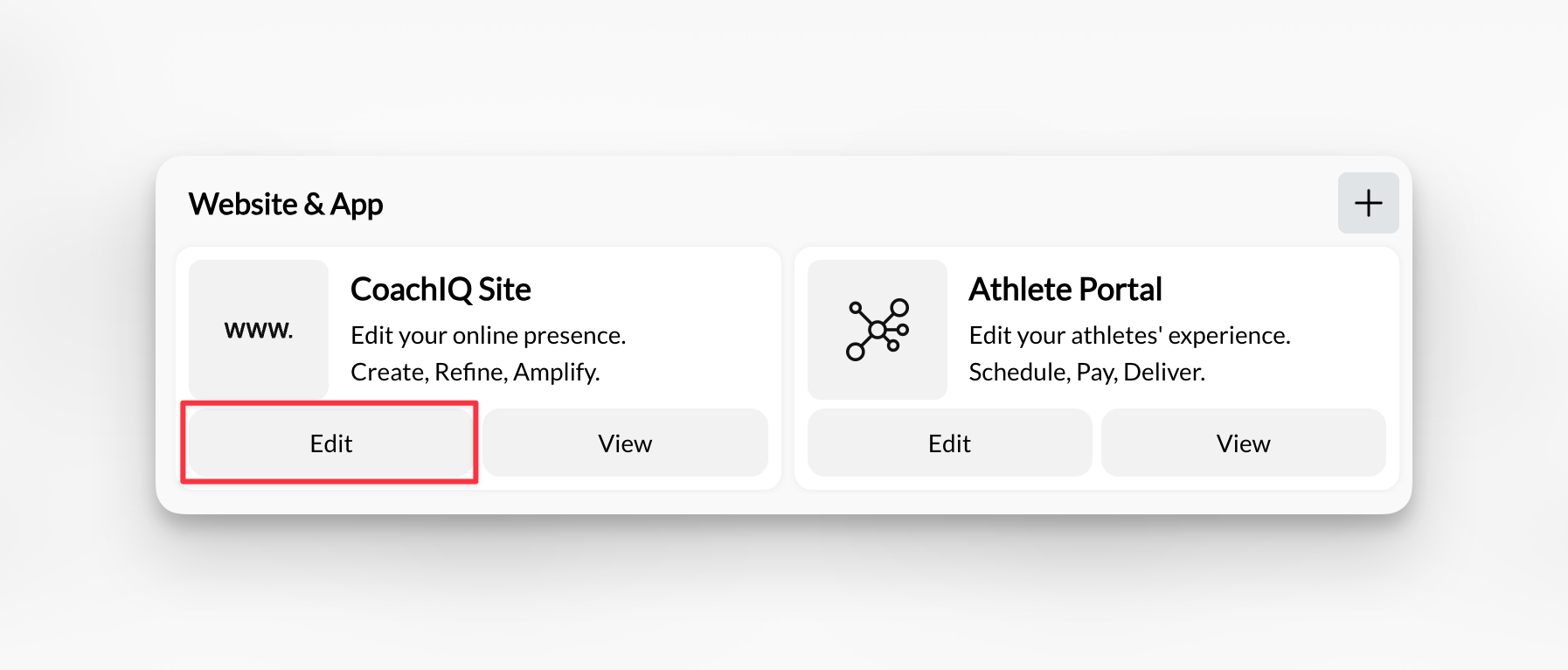
Edit Site Pn
2

View your pages list

In the left sidebar, you’ll see Pages with a dropdown arrow. Click to expand and view all your current pages.
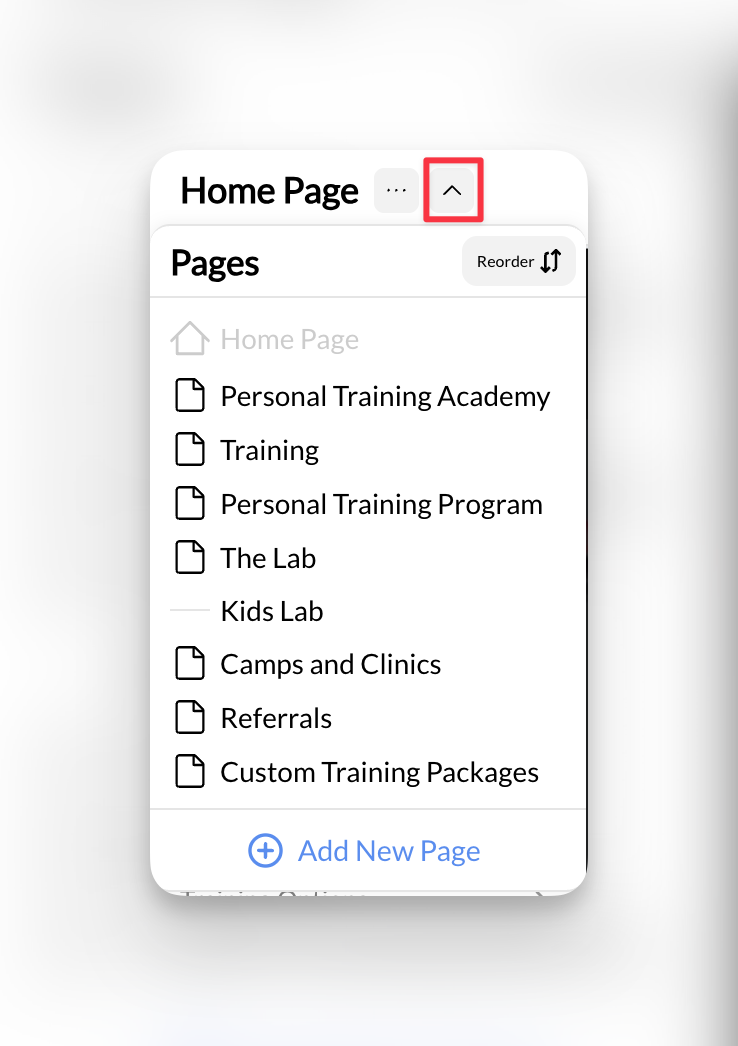
Pages Pn
Default pages: Most coaching websites start with Home and About pages, which we create during your initial website build.
3

Switch between pages

Click any page name to switch to editing that page. The page name will appear at the top of the builder interface.
Success indicator: You’ll see the selected page name displayed prominently at the top of the interface.

Creating new pages for your coaching website

Adding a new page

1

Click Add New Page

In the Pages section of the left sidebar, click the Add New Page button to open the page creation dialog.
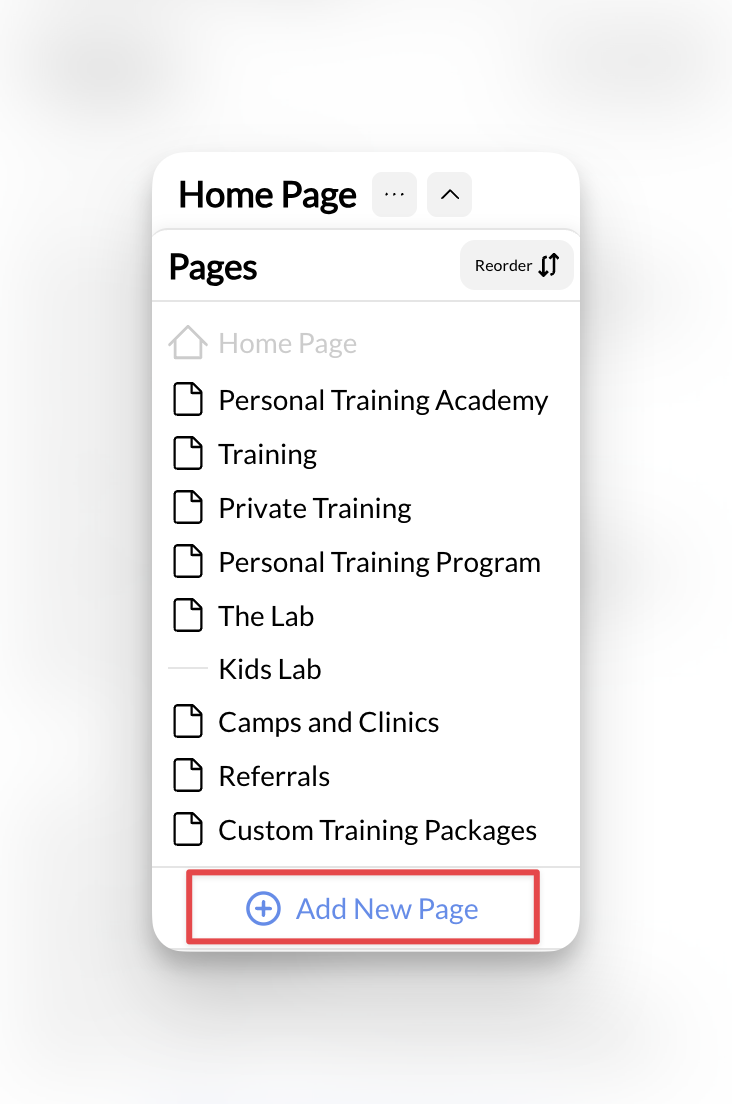
Add New Page Pn
2

Configure your new page

Fill out the page creation form with your coaching content details:Required fields:
  • Page Title: What visitors see (e.g., “Basketball Skills Training”)
  • Page Slug: URL-friendly version (automatically generated)
  • Parent Page: Select if this is a subpage, or leave blank for main page
  • Page Template: Choose the layout that fits your content type
SEO tip: Use descriptive page titles that include relevant coaching keywords like “Basketball Training,” “Soccer Skills,” or “Youth Sports Coaching.”
3

Select the right template

Choose from coaching-specific templates:
  • Default: Basic page layout for general content
  • Training Programs: Showcases your coaching services
  • About: Perfect for coach biography and credentials
  • Contact: Contact forms and location information
Template choice matters: The template determines which sections are pre-loaded. You can always add or remove sections later.
4

Create and publish

Click Create New Page to generate your page, then Publish to make it live on your coaching website.
Page created: Your new page appears in the pages list and is ready for content editing.

Setting up page hierarchy and templates for coaching services

Understanding page templates

Page templates provide pre-built layouts optimized for different types of coaching content. Each template includes relevant sections and structure for specific purposes:
Best for: Service pages, program overviews, training offerings
  • Hero section with program highlights
  • Service description areas
  • Pricing displays
  • Call-to-action buttons for booking

Creating parent and subpages

Many coaches benefit from organizing services into logical groups. Here’s how to structure your offerings:
Training Programs (Parent Page)
  • In-Person Training
  • Online Coaching
  • Group Sessions
  • One-on-One Training

Example: Creating a complete training programs structure

1

Create the parent page

  1. Click Add New Page
  2. Page Title: “Training Programs”
  3. Parent Page: Leave blank (this will be a main page)
  4. Template: Select “Training Programs”
  5. Click Create New Page
2

Add your first subpage

  1. Click Add New Page again
  2. Page Title: “In-Person Training”
  3. Parent Page: Select “Training Programs”
  4. Template: Choose “Training Programs” or “Default”
  5. Click Create New Page
Subpage indication: You’ll see the subpage indented under its parent in the pages list.
3

Create additional subpages

Repeat the process for other training types:
  • Online Coaching
  • Group Sessions
  • Private Training

Example: Creating a complete training programs structure

1

Create the parent page

  1. Click Add New Page
  2. Page Title: “Training Programs”
  3. Parent Page: Leave blank (this will be a main page)
  4. Template: Select “Training Programs”
  5. Click Create New Page
2

Add your first subpage

  1. Click Add New Page again
  2. Page Title: “In-Person Training”
  3. Parent Page: Select “Training Programs”
  4. Template: Choose “Training Programs” or “Default”
  5. Click Create New Page
Subpage indication: You’ll see the subpage indented under its parent in the pages list.
3

Create additional subpages

Repeat the process for other training types:
  • Online Coaching
  • Group Sessions
  • Private Training

Setting up header navigation

1

Access header navigation settings

Look for Header, Navigation, or Menu settings in your Website Builder interface. This is typically found in the main sections or a dedicated navigation area.
Web Builder Navigation Pn
Location varies: Navigation settings may be in the header section, main builder area, or a dedicated navigation panel depending on your website template.
2

Add main navigation items

Configure your primary header menu with essential coaching pages:
  • Home
  • About
  • Training Programs (or Services)
  • Contact
Professional appearance: Keep your main navigation to 4-6 items for a clean, professional look that doesn’t overwhelm visitors.
3

Configure dropdown menus

For parent pages with subpages, set up dropdown navigation:
  1. Select “Training Programs” in navigation settings
  2. Add submenu items linking to each subpage:
    • In-Person Training → Link to in-person training page
    • Online Coaching → Link to online coaching page
    • Group Sessions → Link to group sessions page
Dropdown best practices: Use dropdowns sparingly and ensure they work well on mobile devices where most parents browse.
4

Add call-to-action buttons

Include prominent action buttons in your header:
  • “Book Session” or “Schedule Training”
  • “Free Consultation”
  • “Get Started”
Link these buttons to your booking system or contact forms.
Navigation complete: Visitors can now easily navigate to all your coaching services and take action to book training.
1

Access footer settings

Find the Footer section in your Website Builder, typically listed in the main sections or site structure.
2

Add footer navigation links

Include secondary navigation items in your footer:
  • Privacy Policy
  • Terms of Service
  • Blog or News (if applicable)
  • Additional service pages
Footer purpose: Footer navigation is perfect for legal pages, secondary content, and links that support your main navigation without cluttering it.
3

Include contact information

Add essential contact details to your footer:
  • Phone number
  • Email address
  • Training location/address
  • Business hours
Local SEO: Including your location and contact information in the footer helps with local search rankings for coaching services.
4

Add social media links

Connect your social media profiles:
  • Instagram (great for training videos and athlete highlights)
  • Facebook (community building and parent communication)
  • YouTube (coaching tutorials and testimonials)
  • TikTok (if relevant for your target audience)

Website navigation best practices for coaches

Limit your main navigation to 5-7 key items that align with what parents and athletes want to accomplish: learning about your coaching, finding the right program, and taking action. Most successful coaching websites use: Home, About, Services/Programs, Testimonials, and Contact.
Instead of generic names, use specific coaching terms that clearly communicate value:
  • “Basketball Skills Training” vs “Services”
  • “Coach Biography & Experience” vs “About”
  • “Schedule Your First Session” vs “Contact” This helps both visitors and search engines understand your coaching offerings.
Many parents browse coaching websites on phones while at games or practices. Ensure your navigation works smoothly on mobile devices with clear, touch-friendly menu items, logical dropdown organization, and fast-loading pages.
Your navigation should guide visitors toward key actions like booking sessions or contacting you. Include prominent buttons for “Schedule Training,” “Free Consultation,” or “Get Started” in your header navigation, linking to your scheduling system.
Structure your pages around what parents and athletes want to accomplish:
  • Learning phase: About, Philosophy, Credentials
  • Evaluation phase: Services, Training Types, Testimonials
  • Decision phase: Schedule, Contact, Pricing, Programs

Common page and navigation management tasks

Reordering pages and navigation items

1

Reorder pages in sidebar

In the Pages section, look for drag handles or reorder options next to each page name. Click and drag pages to rearrange their order.
Reorder Sections Pn
Hierarchy maintained: Subpages stay with their parent pages when you reorder main pages.
2

Adjust navigation menu order

In your navigation settings, drag menu items to reorder how they appear in your header navigation. The order in your navigation settings determines the display order on your live site.
3

Publish changes

Click Publish to save your page order and navigation changes to the live website.
Changes live: Your navigation order updates immediately on your coaching website.

Renaming and editing pages

  1. Click the page name in the sidebar
  2. Look for an edit or rename option (often a pencil icon)
  3. Enter the new page name
  4. Update navigation menu if the page appears there
  5. Save and publish changes

Deleting pages safely

Before deleting pages: Check that the page isn’t linked in your navigation menus, scheduling system, or other parts of your coaching platform.
1

Remove from navigation first

Before deleting a page, remove it from your header and footer navigation to avoid broken links.
2

Check for internal links

Review other pages to ensure they don’t link to the page you’re about to delete. Update or remove these links.
3

Delete the page

Use the delete option in your page management interface. Most systems will ask for confirmation before permanently removing the page.
4

Publish and test

Publish your changes and test your website to ensure all navigation works correctly without the deleted page.

Frequently asked questions

Most successful coaching websites have 5-10 pages total. Start with essential pages (Home, About, Services, Contact) and add specialized pages as your business grows. Focus on quality content that serves your athletes and parents rather than creating many pages with thin content.
Yes, you can delete pages through the page management interface. However, be careful not to delete pages that are linked in your navigation menus, scheduling system, or payment products. Always update your navigation and remove internal links before deleting pages.
Templates provide pre-built layouts optimized for different content types. “Training Programs” templates include sections for service descriptions, pricing, and booking buttons. “About” templates focus on coach credentials and philosophy. “Contact” templates emphasize forms and location information. Choose the template that best matches your page’s purpose.
Yes! You can create pages for specific purposes (like thank-you pages after form submissions, specific landing pages for marketing campaigns, or detailed service pages) that aren’t included in your main navigation. These pages are still accessible via direct links but don’t clutter your main menu.
CoachIQ websites are automatically mobile-optimized, but you should test your navigation on a phone. Keep menu items short and descriptive, use clear hierarchy with logical dropdowns, and ensure touch navigation works smoothly. The preview feature shows how your navigation appears on mobile devices.
Absolutely! You can add, remove, or reorganize pages and navigation at any time using the Website Builder. However, major structural changes might temporarily affect your search engine rankings, so it’s best to plan your structure carefully during initial setup and make incremental improvements rather than complete overhauls.
This depends on your coaching business model. If you have standard pricing, including a “Pricing” page in navigation can help qualify leads. If you offer custom coaching packages, you might prefer to discuss pricing during consultations. Consider your target market and how price-sensitive your coaching services are.
Good navigation structure helps search engines understand your website and improves user experience, both important for SEO. Use descriptive page names with relevant coaching keywords, create logical page hierarchies, and ensure all important pages are accessible within a few clicks from your homepage.

Ready to build your coaching website structure?

Pro tip: Before creating many pages, sketch out your ideal website structure on paper. Consider your coaching services, target audience (parents, athletes, or both), and the journey you want visitors to take from first discovery to booking their first training session. This planning prevents navigation confusion later.