

Where to find this: Athlete Portal → Settings → Family
How a family is structured
- Parent holds the login, the payment method, and the inbox. Their role in People is Parent.
- Athlete is the person who attends sessions. An athlete connected to a parent can be a full account with its own login, or a managed child with no login at all.
- The parent-to-athlete link is stored on both profiles. Reminders, booking views, and automations follow that link (details below).
The Family tab only appears on profiles with the Parent role. If a parent tells you they cannot find it, check their role in User Details and change it to Parent if needed. See Sign-up & Profile to make new sign-ups land on the right role from the start.
What parents can do
1
Open Settings
From the athlete portal, the parent selects Settings.
2
Go to Family
They select Family, where they’ll see the athlete they’re currently managing.
3
Add a family member
Selecting Add Athlete lets them add another child to the account. They can also select an existing athlete listed there to switch to managing them.
What you can do as a coach
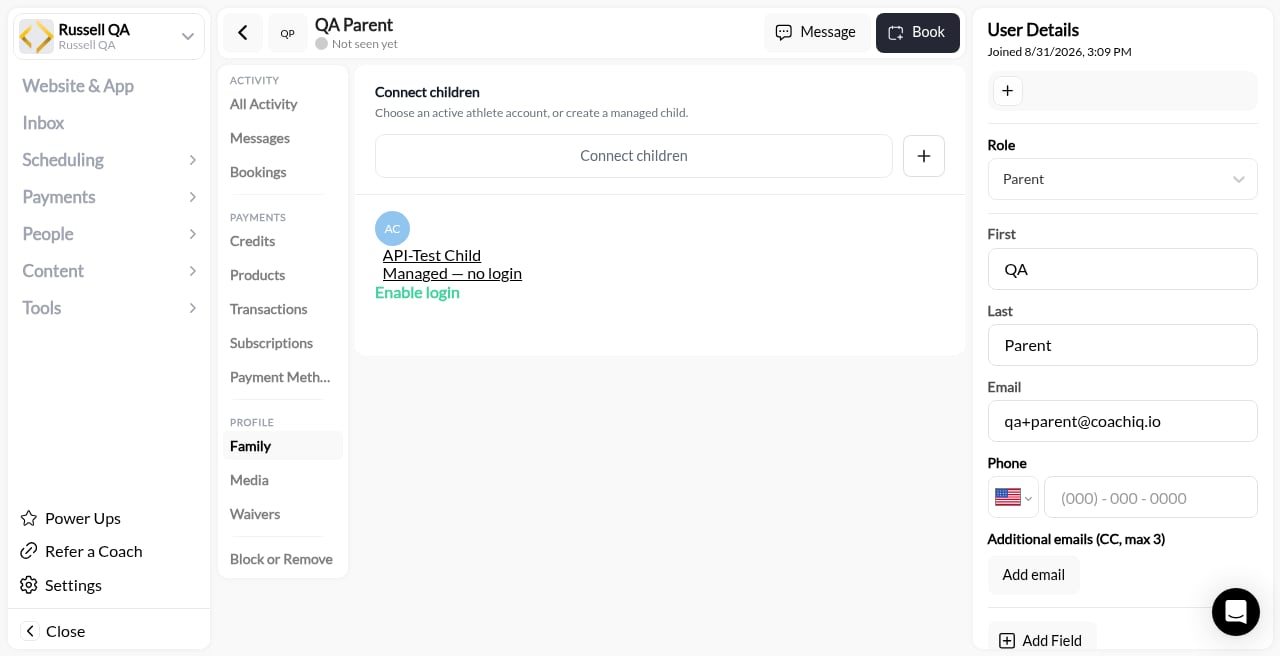
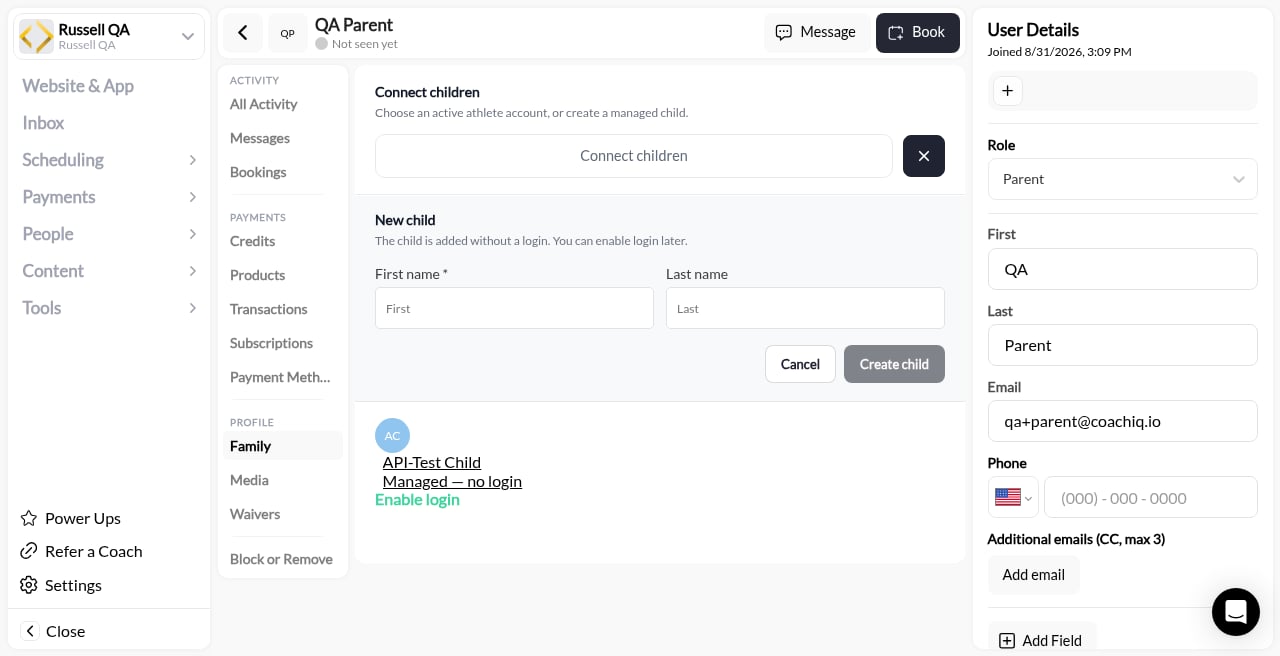
Where to find this: People → open the client → PROFILE → Family
- Helper: “The child is added without a login. You can enable login later.”
- First name (required) (placeholder First) and Last name (placeholder Last)
- Cancel and Create child
Managed children with no login
A managed child has a profile, bookings, credits, and tags like any athlete, but no email and no password. That is the right shape for most youth athletes: the parent does everything on their behalf, and nothing is ever sent to an inbox the child does not have.- Anything addressed to a managed child (reminders, announcements, in-app messages) is delivered to their parent. See Who receives reminders and notifications.
- When the athlete is old enough to run their own account, click Enable login on the child’s row. They keep their history.
- Automations can target a managed child’s parent explicitly with the trigger user and their guardians option on Target User. See Triggers and actions.
Who receives reminders and notifications
Practice reminders and notifications for an athlete go to that athlete and to their connected parent. For a managed child with no login, the parent is the only reachable destination, so the parent is who gets the reminder. This is what makes a booking reminder land with the person who is actually driving to the field. A parent with two athletes is connected to both, so they receive both athletes’ reminders from one account. You do not need to tag or message the parent separately.Booking for a specific family member
Once family members are added, booking a session includes a Select Athlete step. The parent picks which athlete the session is for — themselves or any linked family member — before checkout.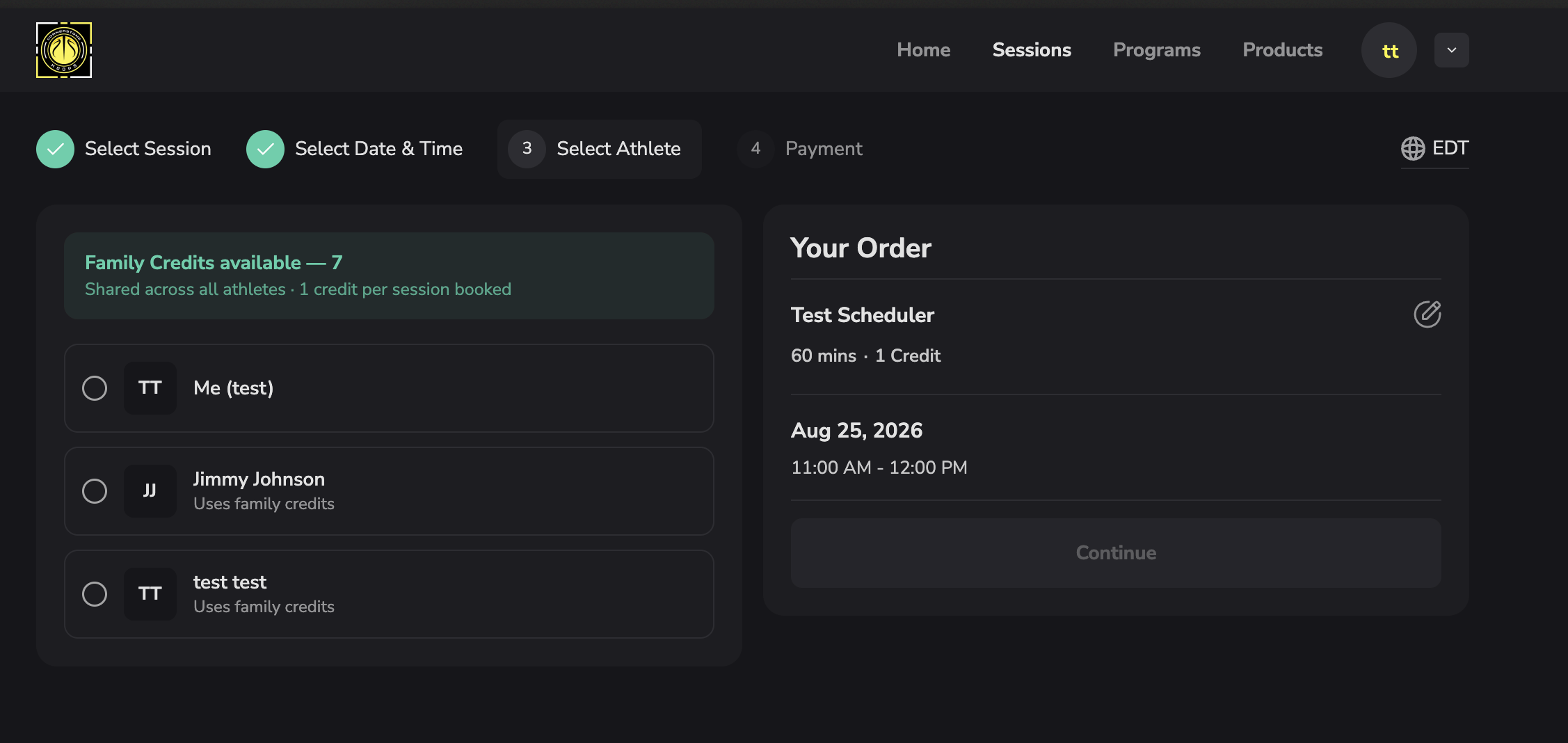
How a parent sees their athletes’ bookings
A parent’s own Bookings view in the athlete portal, and in the native iOS and Android apps, lists every connected athlete’s sessions grouped by athlete. The parent never has to switch into each child to check who has practice tonight. Session location shows on each booking in the app, so a per-date venue change is visible where the parent looks. You see the same thing from the coach side: opening the parent in People → Bookings shows all bookings under that parent, sorted by which athlete they belong to. Opening the athlete shows only that athlete’s bookings. See Bookings tab.Registering an athlete at checkout
Buying a team registration, camp, or membership for a child is a purchase, not a booking, so it goes through checkout rather than the Select Athlete step above. When the purchasing parent has more than one athlete on the account, checkout asks Who are you registering? before payment. What attaches to the athlete they pick:- The purchase itself, so you can see which child a registration paid for
- Any team tag the product’s automation applies
- Any credits the product grants
- Date of birth, which is collected per athlete rather than once per family
Whether a product is bought for the buyer themselves or for a managed athlete is a setting on the product. See Product Builder for the buyer vs. managed athlete option and how it changes checkout for adults buying for themselves.
Common questions
Does a managed child need an email address?
Does a managed child need an email address?
No. A managed child has no login and no email. Everything meant for them is delivered to the connected parent. Add an email and click Enable login only when the athlete should run their own account.
Can two parents be connected to the same athlete?
Can two parents be connected to the same athlete?
Connect each parent to the athlete from that parent’s Family section in admin. Both then see the athlete’s bookings and receive their reminders. If you run into a case that does not behave this way, contact support with the family’s names.
A parent bought a registration but the child has no practices on their schedule
A parent bought a registration but the child has no practices on their schedule
Check which athlete the purchase is attached to: open the parent in People → Products. If the purchase landed on the parent rather than the child (this happened before the Who are you registering? step existed), book the child into the team’s practice sessions manually and move the tag to the child. Registrations made after August 2026 attach to the selected athlete automatically.
Do parents see their athletes' bookings in the native app?
Do parents see their athletes' bookings in the native app?
Yes. The iOS and Android apps show a parent every connected athlete’s bookings, grouped by athlete, with the session location. See Booking in the native app.
Related articles
Booking for Multiple Athletes
How shared credits and family booking work today
Client Profiles
Family is under PROFILE on the client
Bookings tab
A parent’s bookings grouped by athlete
Sign-up & Profile
Force new sign-ups to the Parent/Guardian account type
Triggers and actions
Target an athlete and their guardians from an automation
Booking in the native app
Pay-or-credit prompt, purchases in the browser, session location